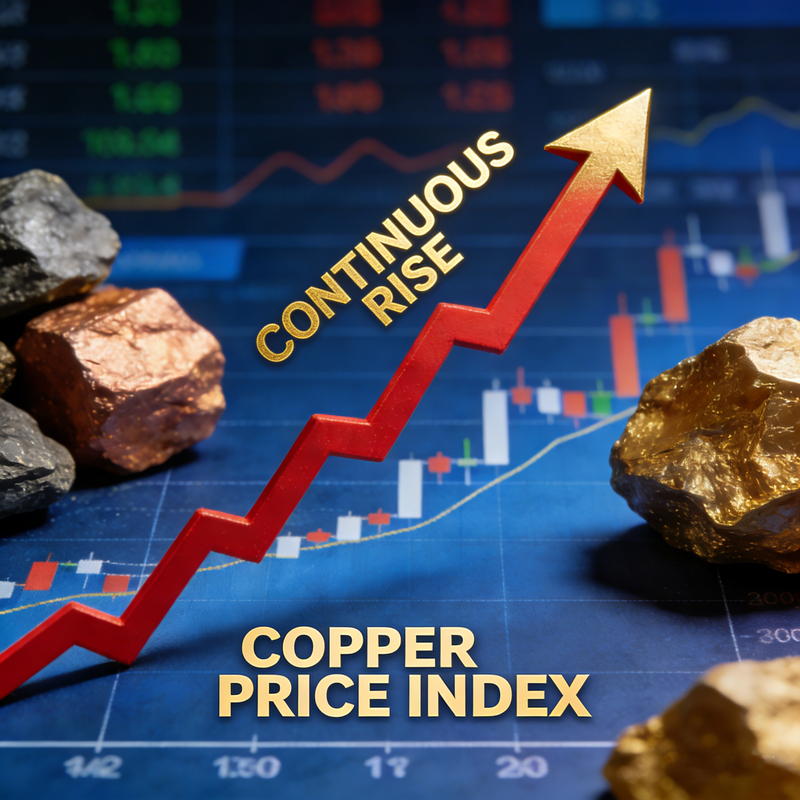
Recently, the global commodities market has experienced significant volatility, with copper prices soaring past the 100,000 RMB per ton mark, reaching a record high. This trend not only impacts the global economic landscape but also directly propels a wave of material innovation within the home appliance manufacturing sector. It is particularly noteworthy that future copper prices are expected to remain highly unstable, with a continued upward trend. Amid this sustained raw material price surge, the home appliance industry is undergoing a profound transformation—the air conditioning sector is actively advancing “aluminum-for-copper” technical standards, while in the water heater segment, products equipped with stainless steel heat exchangers are emerging as a “reliable choice” in the market due to their unique advantages.
Soaring Copper Prices and an Uncertain Outlook Drive Necessary Industry Change
Copper, as a crucial industrial metal, is widely used in home appliance manufacturing. However, with global economic recovery, explosive growth in copper demand from new energy industries, and intertwined factors such as strained global supply chains, copper prices continue to climb, and their future trajectory remains highly uncertain. Industry analysis indicates that, amid the long-term trend of green energy transition, copper demand will maintain rigid growth, while the supply side faces multiple constraints. High price volatility and further upside pressure on copper are becoming the new normal.
Faced with this challenging situation, the home appliance industry is actively seeking material innovation solutions. The advancement of “aluminum-for-copper” standards in the air conditioning industry is a significant manifestation of this transformation. As technology matures and industry standards are gradually improved, the application of aluminum materials in air conditioning heat exchangers is gaining broader recognition, providing valuable experience and a model for material innovation across the entire home appliance industry.
Stainless Steel Heat Exchangers: The “Stability Anchor” in the Water Heater Sector
While the air conditioning industry explores “aluminum-for-copper” alternatives, stainless steel heat exchanger technology in the water heater sector has become increasingly mature. Water heaters equipped with stainless steel heat exchangers demonstrate unique strategic value: the price structure of stainless steel materials is relatively independent and stable, with minimal impact from international copper market fluctuations, fundamentally mitigating long-term and severe raw material cost risks.
It is particularly worth emphasizing that, unlike the ongoing standardization efforts for “aluminum-for-copper” in air conditioning, the application of stainless steel heat exchangers in water heaters is already well-established. Through advanced fin design, their thermal efficiency can achieve levels no lower than traditional oxygen-free copper tanks. This means consumers do not have to compromise between performance and cost.
Dual Advantages: Corrosion Resistance and Thermal Efficiency
Stainless steel materials offer inherent advantages in corrosion resistance. Especially in regions with hard water, traditional copper heat exchangers are prone to scaling and corrosion, which affects thermal efficiency and lifespan. In contrast, stainless steel’s strong corrosion resistance enables it to maintain efficient heat transfer over the long term.
Through innovative approaches such as increasing heat exchange area, optimizing fluid channel design, and adopting high-efficiency heat transfer fins, engineering technicians have successfully ensured the thermal efficiency of stainless steel heat exchangers. These technological breakthroughs resonate with the air conditioning industry’s exploration of “aluminum-for-copper” technology, collectively demonstrating the home appliance industry’s determination and capability to address cost challenges through material innovation.
An Era of Environmental and Sustainable Choices
From an environmental perspective, stainless steel heat exchangers offer clear advantages. Stainless steel materials have a high recycling rate, and the recycling process consumes less energy, aligning with the development philosophy of green manufacturing and the circular economy. This characteristic is in line with the environmental considerations driving the air conditioning industry’s push for “aluminum-for-copper,” jointly responding to the global trend of sustainable development.
Collaborative Industry Innovation for a Stable Future
The advancement of “aluminum-for-copper” standards in the air conditioning industry alongside the maturity of stainless steel technology in water heaters signifies that the home appliance industry is developing a synergistic effect in material innovation. This wave of cross-category technological innovation not only provides cost advantages for individual enterprises but also builds systemic resilience against raw material price fluctuations for the entire industry.
For consumers, this means more diverse and stable product choices. Whether it’s stainless steel water heaters or air conditioning products compliant with new standards, users can enjoy long-term cost controllability and reliable performance, shielding them from the impact of sharp fluctuations in raw material prices.
Conclusion
The breach of 100,000 RMB per ton for copper prices, coupled with the expectation of continued volatility and upward pressure, is accelerating material innovation in the home appliance industry. From the advancement of “aluminum-for-copper” standards in air conditioning to the mature application of stainless steel heat exchanger technology in water heaters, a profound industry transformation is underway.
Water heaters equipped with stainless steel heat exchangers offer consumers an ideal solution to cope with copper price volatility, thanks to their excellent cost stability, superior corrosion resistance, proven thermal efficiency, and environmental sustainability. This represents not only technological progress in the water heater industry but also an intelligent response by the entire home appliance manufacturing sector to resource challenges.
Choosing a water heater with a stainless steel heat exchanger means opting for stability unaffected by copper price fluctuations, quality that stands the test of time, and participation in a consumer upgrade led by technological innovation. Amid the wave of material revolution, stainless steel heat exchangers are guiding the water heater industry toward a more mature and reliable new era.